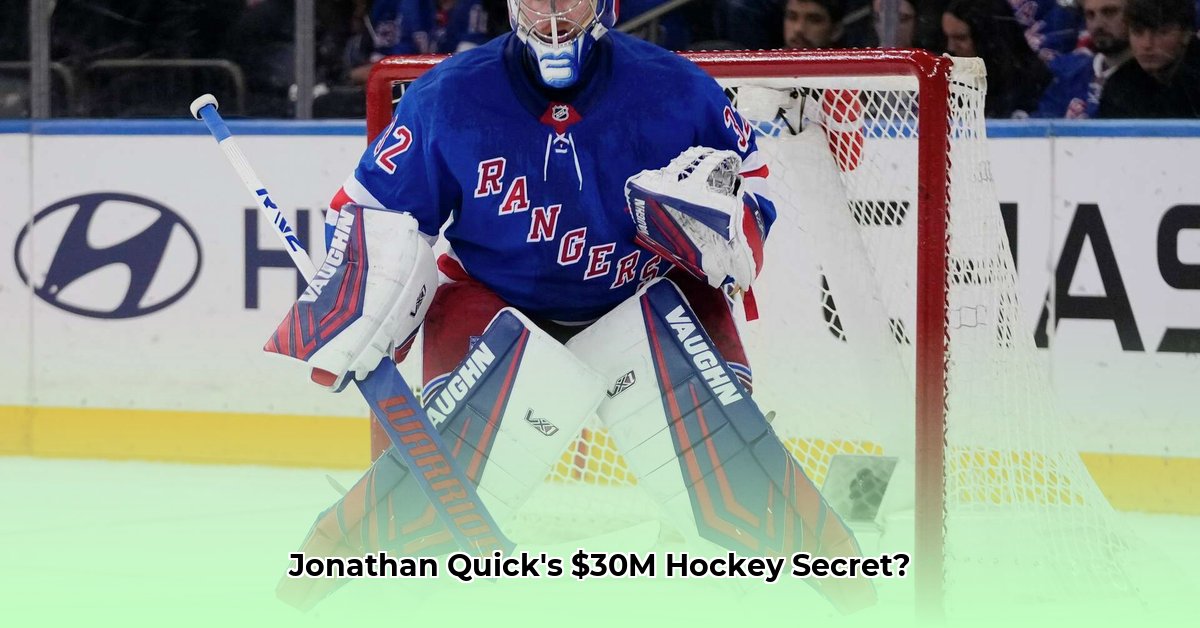
Jonathan Quick's Financial Triumph: From Undrafted to Multi-Millionaire
Jonathan Quick. The name resonates with images of dazzling saves, acrobatic athleticism, and the electrifying roar of the crowd. But beyond the legendary status on the ice, Quick has amassed a substantial fortune, estimated at $30 million in 2025. This isn't just a story of hockey prowess; it's a testament to strategic career management and shrewd financial planning. How did an undrafted free agent become a multi-millionaire? Let's explore the journey behind the numbers.
The Long Road to Riches: From Undrafted to NHL Superstar
Jonathan Quick's path wasn't paved with the privilege of a high draft pick. He relentlessly honed his skills, earning his spot and proving his worth game after game. This unwavering dedication culminated in becoming a cornerstone of the Los Angeles Kings dynasty, culminating in two Stanley Cup victories. This perseverance translated directly into financial success. His groundbreaking 10-year, $58 million contract extension in 2012 was a watershed moment, a significant leap forward in his financial journey. This wasn't merely a life-altering paycheck; it represented a validation of his talent and unwavering commitment.
But the $58 million is just a fraction of the picture. Post-season bonuses, earned through countless clutch saves and nail-biting wins, significantly bolstered his earnings. Each spectacular stop wasn't just another highlight reel moment; it directly impacted his bank account, demonstrating the high financial stakes of playoff success. He was compensated not only for regular season performance but also for his exceptional contributions under immense pressure. How many other players can say their incredible saves directly translated into millions of dollars?
Beyond the Rink: Endorsements, Investments, and the Power of Diversification
Quick’s on-ice dominance naturally translated into lucrative endorsement opportunities. His image adorned hockey equipment, and his name became synonymous with various products, likely generating hundreds of thousands, if not millions, in additional income during his peak years. While the precise figures remain private, his celebrity status undoubtedly translates into significant off-ice earnings.
Beyond endorsements, it's likely Quick engaged in diversified investments. Though specifics remain undisclosed, his substantial NHL salary provided a formidable foundation for building a portfolio, perhaps encompassing real estate or other ventures. This financial diversification is a hallmark of smart financial planning for professional athletes.
The Unpredictability of a Long Career: The Risk of Injury
The life of a professional hockey player, particularly a goaltender, isn't without risks. Injuries are an ever-present threat, and Quick, known for his aggressive style of play, has faced his share of setbacks. Each injury carries the potential to impact his earning ability and career longevity. These periods of uncertainty highlight the unpredictability inherent in a professional athletic career and the importance of financial preparedness, even for a high-earner like Jonathan Quick.
Jonathan Quick's Future: Beyond the Puck
Retirement from active play doesn't signal the end of Quick’s financial success. His stellar career guarantees continued revenue streams through endorsements and potential media appearances. His name recognition and legendary status within the hockey world maintain his high demand. Furthermore, his robust financial planning, including significant diversification of assets, should ensure long-term financial security, regardless of future opportunities.
Jonathan Quick's Financial Success: A Summary
| Financial Aspect | Estimated Value (USD) | Notes |
|---|---|---|
| Career NHL Earnings | >$70,000,000 | Pre-tax figure, excluding agent fees and other expenses. |
| 2012 Contract Extension | $58,000,000 | A transformative moment, significantly enhancing his net worth. |
| Peak Annual Endorsements | $500,000 - $1,000,000 | Estimated range based on industry comparisons and available information. |
| Jonathan Quick Net Worth (2025 Est.) | ~$30,000,000 | Approximation reflecting available data, subject to change. |
Jonathan Quick’s financial success is more than just a collection of impressive numbers; it's a testament to his unwavering dedication, exceptional talent, and smart financial choices. His journey exemplifies how on-ice triumphs can translate into lifelong financial security, showcasing the potential rewards of a successful NHL career and the importance of careful financial planning.
Negotiating NHL Goalie Contracts: Mitigating Risk and Maximizing Value
The Hockey Code: NHL Salary Cap Analysis
Key Takeaways:
- NHL goalie contracts are complex, necessitating strategic negotiation.
- Comprehensive injury protection is critical.
- Teams must balance player value with salary cap limitations.
- Understanding contract structures, including no-trade clauses and LTIR, is vital.
- Long-term goalie investments are inherently risky, demanding thorough risk assessment.
- Developing young talent presents a potentially cost-effective alternative.
Jonathan Quick's remarkable career trajectory from undrafted player to NHL superstar underscores the unpredictable nature of hockey, which significantly impacts contract negotiations. How can teams protect themselves from the potential financial devastation caused by injury to a star goaltender? Successfully navigating the complexities of NHL goalie contract negotiations is paramount.
Navigating the High-Stakes World of Goalie Contracts
Goaltenders are unique assets. Their performance disproportionately impacts team success, creating immense reliance on a single position. This inherent risk necessitates meticulous contract structuring.
Essential Elements in Contract Negotiation
Negotiating goalie contracts demands a multifaceted strategy. Key considerations include:
Injury Clauses: Precisely defined injury parameters, including recovery timelines and financial implications, are essential. This may encompass insurance provisions and salary adjustments.
Contract Length: Longer contracts offer stability but amplify risk. Shorter deals provide flexibility but may compromise player security. The optimal balance depends on factors like age and injury history.
Salary Structure: A performance-based structure can reward excellence but exposes the team to financial risk during injury. A blended approach combining base salary with performance-based incentives provides a more balanced solution.
No-Trade Clauses: While enhancing player security, they can restrict roster adjustments during injury emergencies. Carefully crafted clauses with specific exceptions offer a compromise.
LTIR (Long-Term Injured Reserve): Thorough understanding of LTIR's implications is vital. While providing cap relief, its strategic use requires forward planning and anticipation of potential scenarios.